THE FOREST BETWEEN US – RESIDENCY AT THE PAPER MILL MUSEUM MUSEUM IN FRÖVIFORS
During the spring winter of 2022, I was invited to an extended AiR at the Frövifors paper mill museum, within the framework of the swedisch art promoting organisation Konstfrämjandet‘s residency project „Skogen Mellan Oss“- the forest between us.
My artistry is an ongoing search for expanded understanding of what it means for a free mind to exist in a bound human form. The focus of my residency was to explore the connection between paper and the forest – both as materiality and as a carrier of experience.
A nation’s paper consumption can be brought in direct relation to its standard of living. Paper carries, among other things, culture, hygiene and food. Paper is also synonymous to social and societal evidence such as receipts, certificates and money. Even the paperless society is based on paper as a conceptual idea. At the same time, the paper is anonymous until content is added. Paper is therefore a potential that we fill with cultural value.
Paper pulp production is dependent on the forest. Even recycled paper needs to have a certain amount of fresh paper pulp added to it to become new usable paper. Paper can be recycled about 6 times before it is used up as material. It is mainly birch and conifers that are used to make new industrial paper pulp. The pressure on the pulp industry and thus also forestry increases with society’s and growth’s simultaneous demands for both a higher standard of living and climate change.
In my work as an artist, I am particularly interested in questions about the relationship between human perception – their inner experience of reality and its corresponding linguistic communicative expression; the creation of value in the seemingly meaningless; rotation and revolution as image and concept; automation processes and the human factor; productive versus reproductive art; repetition, transition and transcendence. The expressions are mixed in drawings, graphic prints, sound, performance, video, painting and sculpture. With that as a starting point, during the residency I had the opportunity to gather experience on site about the history of the paper mill and papermaking, the conditions of the work and the workers, the transition from the industries demand for skilled artisan workers who are well ingrained in the mechanical process to the automated large-scale industry. During the residency I had got to participate in the museum work and also to work independently in the hand paper workshop, experimenting with refining the hand paper process.
The residency culminated in the works „365 paperwork“ and „On being a ghost in the museum and the ephemeral“ which were displayed in the paper mills museum’s exhibition rooms on site in Frövifors during the summer season of 2022.
365 PAPERWORKS
365 (+1) DINA4 sheets produced in the hand paper workshop at the Paper Mill Museum in Frövifors, mixed birch and pine pulp, bleached and unbleached, directly from Billerud Korsnäs pulp production,
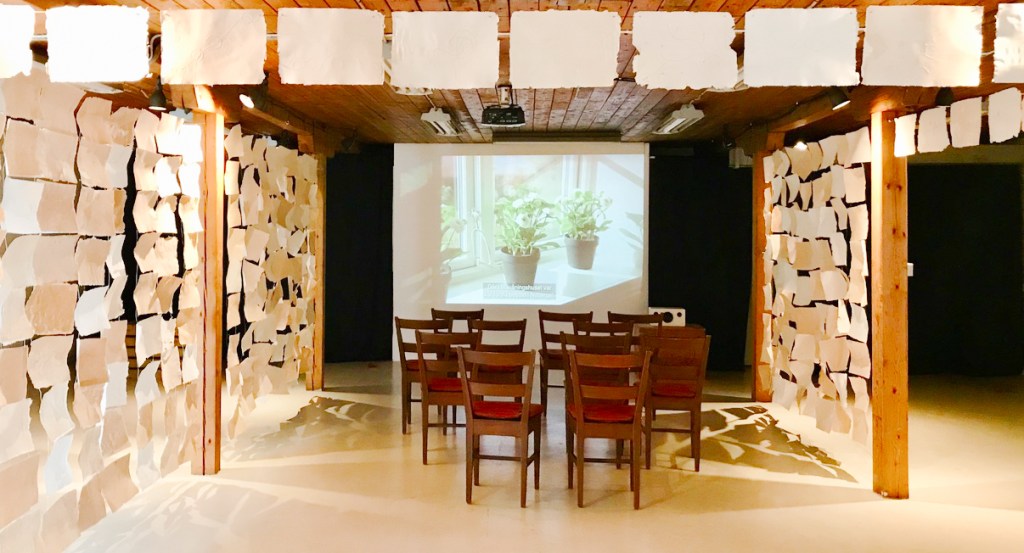

The work aims to show time in paper and is a kind of framing for the work that the paper mill museum did in collecting stories, interviewing Finnish migrant workers. The goal was to make time tangible through paper. If the spectator in the encounter with the work can understand a year on paper with his body, he can perhaps get a glimpse of a life. An attempt to extend the present moment to include the whole – a whole human life ina conscious now as a kind of immediate eternity.
ON BEING A GHOST IN THE MUSEUM AND THE EPHEMERAL LIFE OF A HUMAN (2022)
Photographic work, cyanotype prints on hand made paper from the Paper Museum’s hand paper workshop.
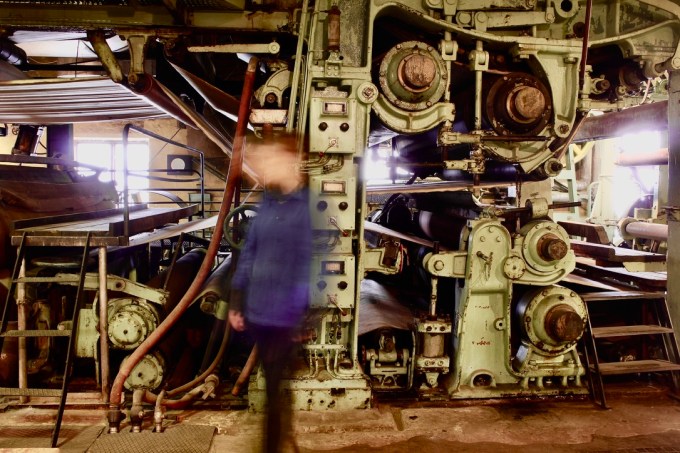
The photo series documents my time at the Frövifors Paper Mill Museum. From January to June 2022, I worked alone in the machine hall’s hand paper workshop. With me I had a photo of my grandfather taken 100 years ago at the Matfors paper mill posing as one of the workers in front of the then modern machines. Somehow the time was mirrored in my mind when I imagined him in a place like this, but in another time where everything was alive and the machines were running at full speed, taking Sweden into new prosperity. In the machine hall museum, time has been frozen since the year 1980, coincidentally also my birth year. Being alone in the engine room for those six months—being the only thing moving, the only thing moving things, made me feel like a ghost in history.
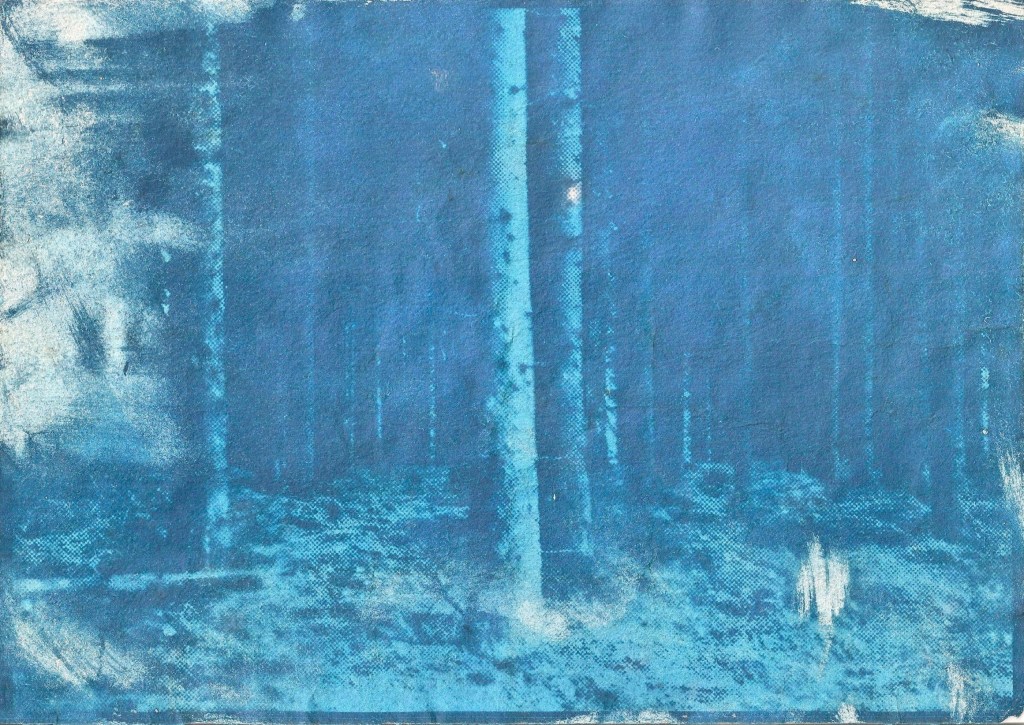
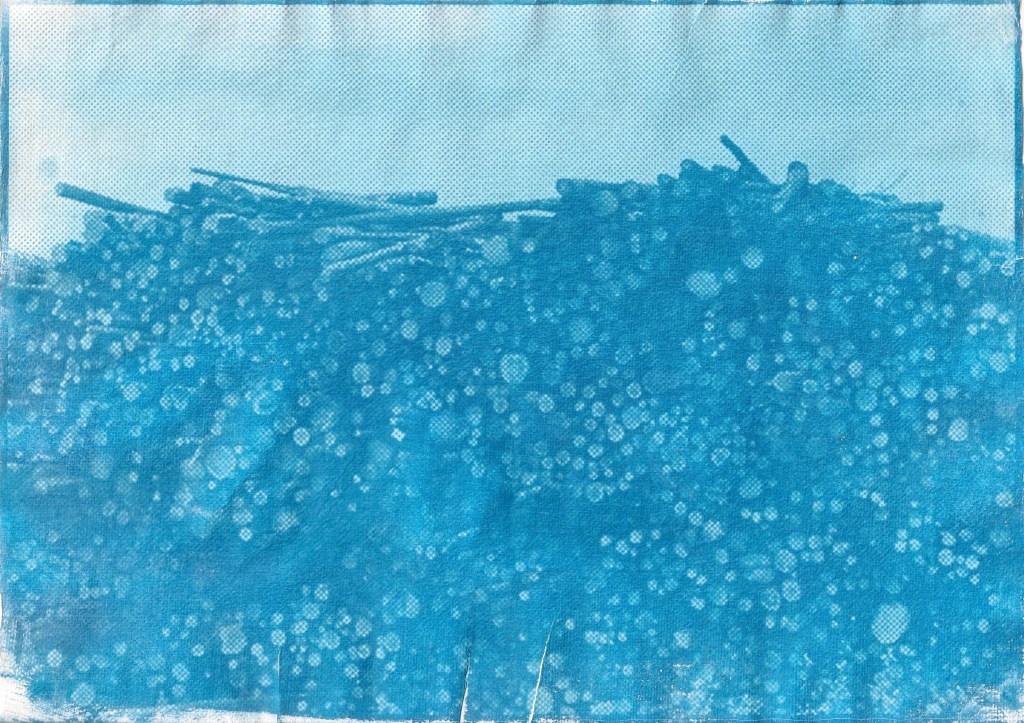


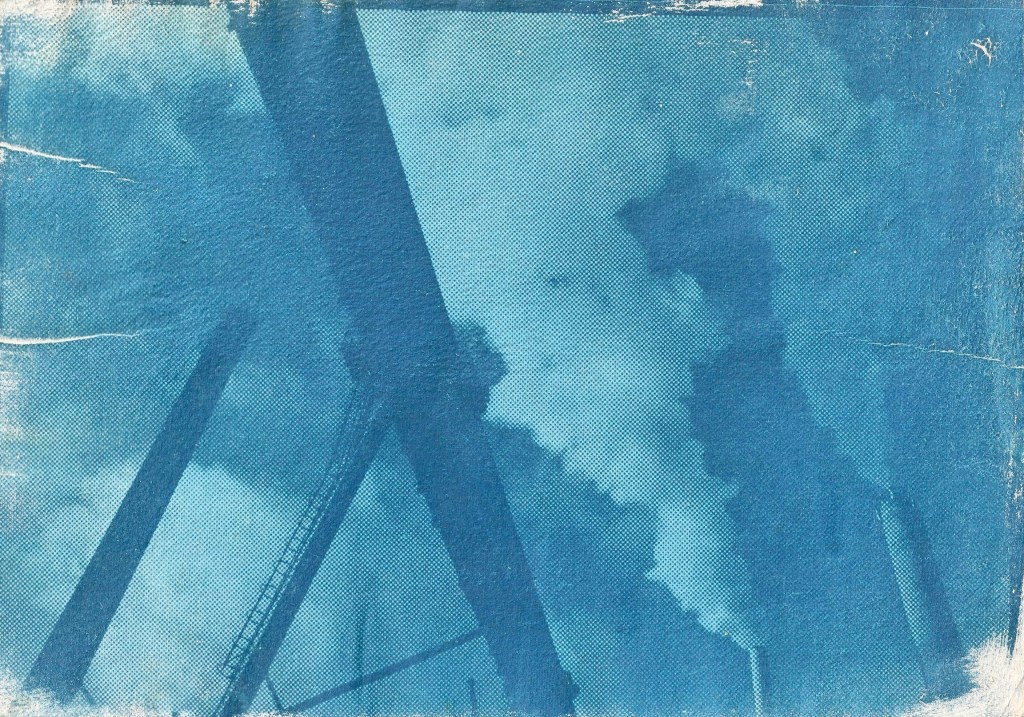

Cyanotyping is a historical photo technique where a substrate is photosensitized with a light-sensitive solution mixed with two iron-based chemical solutions and exposed to UV light. The negative is contact copied in 1:1. The technology was used professionally in the middle of the 20th century for copying maps and drawings, so-called blue prints.
 charlotteostritsch.com